
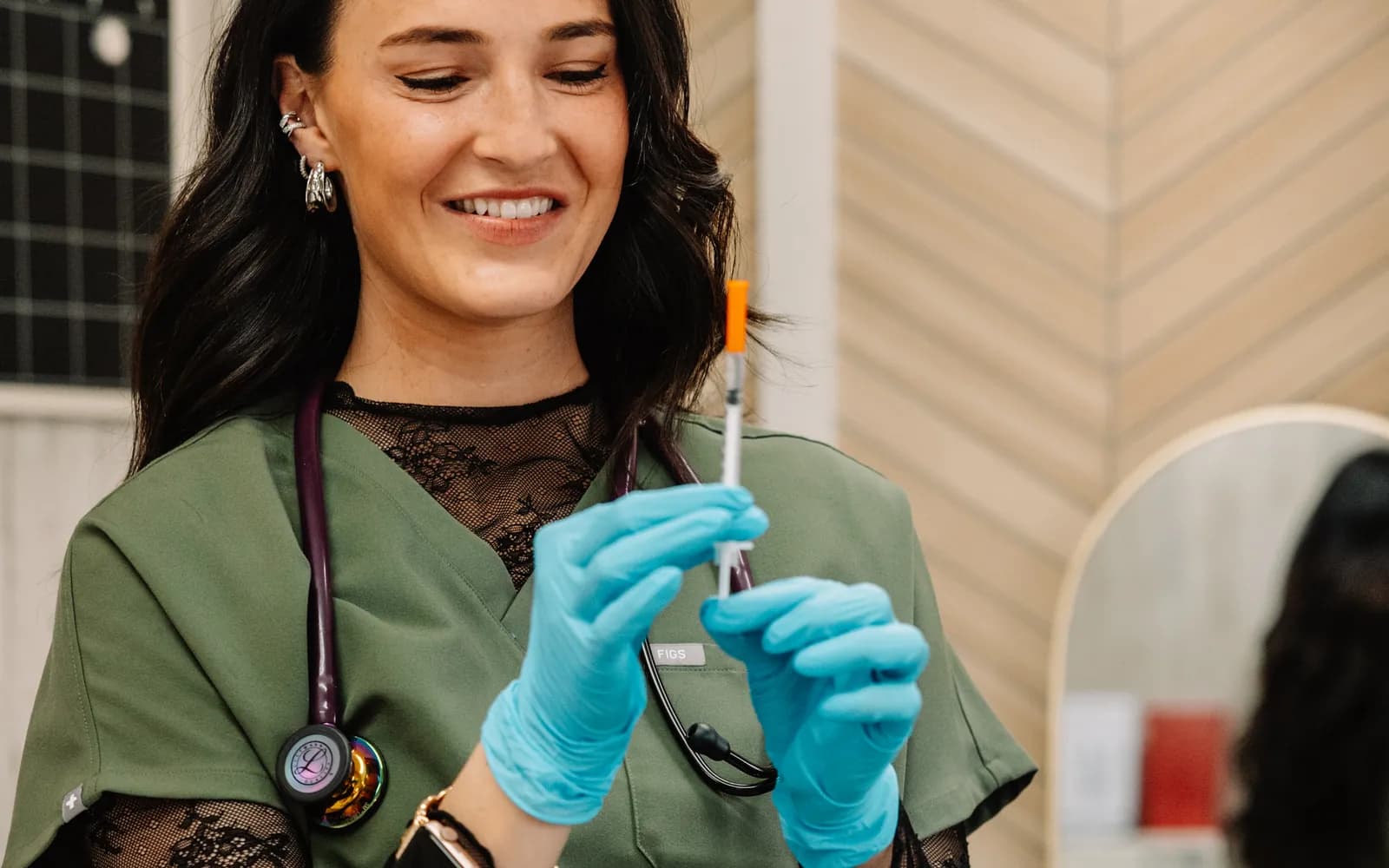
If you've started looking into your first round of "tox," you've already noticed the question gets complicated faster than it should. There are several FDA-approved neuromodulators on the market, and the reasons one studio prefers a particular product over another are usually a mix of clinical evidence, manufacturer relationships, and real-world results from years of injecting the same population.
Here's how I think about it in my Vernal studio.
The category, in one paragraph
Neuromodulators — Botox, Daxxify, Xeomin, Dysport, and Jeuveau — are all purified forms of botulinum toxin type A. They temporarily relax the small muscles that pull skin into expression lines (the "11s" between the brows, forehead lines, crow's feet). They're FDA-approved for the temporary improvement of moderate to severe glabellar lines, with some products approved for additional indications. The differences between them are real, but smaller than the marketing makes them sound.
What I offer in this studio, and why
I work with Daxxify and Xeomin. I picked them because the results, in my hands, on this clientele, have been the most consistent — and because both have features that suit a small-volume, long-cycle practice.
Daxxify
Daxxify is the newest neuromodulator on the U.S. market. The headline is duration: in clinical trials, it lasted longer than older botulinum-toxin products for many patients. In practice, that means longer between appointments — which suits a Basin clientele that doesn't always want to drive into Salt Lake every three months.
It's not a miracle drug. The mechanism is the same. But the formulation gives most of my clients an extra month or two before they start to notice movement returning, and that extra runway is meaningful when your nearest medspa is forty minutes away.
Xeomin
Xeomin is the cleanest formulation of the bunch — there are no accessory proteins, just the active neurotoxin. For some people that matters; for most it doesn't. I keep Xeomin on the shelf for clients who've developed resistance to other products, who want a simpler ingredient list, or who simply prefer it after trying it once.
Xeomin is also slightly cheaper per unit, which can matter on a touch-up appointment.
A note on Botox
Botox is the original. It's safe, effective, and well-studied. The reason I don't lead with it isn't that there's anything wrong with it — it's that the products I've chosen serve my specific clientele better. If you've had Botox before and loved it, that information is useful: I can dose Daxxify or Xeomin to land in roughly the same place.
What "natural" actually means in my practice
Most people who tell me they want a "natural" result are saying: don't make me look frozen, don't make me look surprised, don't make me look like I just had work done. The way you get there isn't a different drug; it's a different dose and a different placement.
I dose conservatively. We almost always start with less, with the understanding that you'll come back at the two-week mark and we'll add what's needed. That second appointment is a refinement, not a redo. Most clients leave the first appointment thinking they want more — and most clients leave the second appointment grateful we waited.
What it costs
Both products are listed on the pricing page — Daxxify at $11/unit and Xeomin at $12/unit. Most clients fall in a range; I'm happy to walk through specifics during a free consultation.
How to book
If you've never had neuromodulator before, the first step is a conversation. We'll talk about what's bothering you, what your face does at rest and in expression, and what a starting dose might look like. The consultation is free, and there's no pressure to commit.
The information in this article describes the FDA-approved indications for the discussed products. It is not medical advice. Treatment results vary; specific clinical decisions are made during your consultation.